
While home-grown firms like Tata and Mahindra have been actively participating in the government's e-mobility mission, by launching electrified versions of their existing models, the global firms believe electric is not the best solution for a country where the primary source of power generation is coal, and where infrastructure is a big impediment.
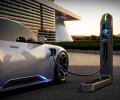
When it comes to electric cars, the electric dream is turning out to be a six-letter word starting with f, ending with y, and having antas in between, notes Suveen Sinha.
Ather Energy would set up 30 charging points across Bengaluru by the end of May and the number would go up to 60 by the end of the year.

Ola Electric will roll out its complete offering of electric scooters and motorcycles in each segment of the market - premium, mass premium, and economical - in the next 12 months in a bid to push for a near-full conversion of the two-wheeler market to electric in three years. According to Bhavish Aggarwal, founder and CEO of Ola Electric, "ICE (internal combustion engine) products will fall off a cliff." He also says the company is aiming to become profitable next year.

Amazon
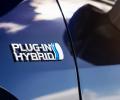
Plug-in hybrids have two engines and the electric part has a much larger battery than in the regular hybrids. Car companies, led by the Japanese, are pushing the Indian government to look at hybrids in the interim if it wants to reduce carbon emission.
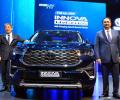
Hybrids have helped Maruti acquire leadership in SUVs, a segment that was never its forte. Toyota has also risen with the hybrid tide to clock its highest-ever annual sales in 2023.
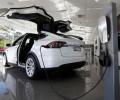
The $306-million investment in Ola Electric Mobility by SoftBank Corp, Arun Sarin Family, Ratan Tata and Matrix has been the biggest funding in this space in value terms this year.

The MG ZS EV, to be unveiled next month, will go head to head with Hyundai Kona, launched in July this year as the country's first fully electric SUV.


BMW Group India recorded its highest annual sales on the back of strong demand for its top-end ICE (internal combustion engine) and electric vehicles (EVs). The German luxury automaker on Thursday announced that its domestic car sales jumped 18 per cent year-on-year (Y-o-Y) to 14,172 units in calendar year 2023 (CY23). This mirrored a trend in the luxury space, with its peers also reporting record numbers.

Car sales are experiencing a challenging phase with around Rs 60,000 crore worth of inventory lying unsold with dealers.

For a petrol car with a Rs 500,000-600,000 price tag, an EV variant would not cost less than Rs 12 lakh, making it virtually unaffordable.

The stock of the country's largest passenger vehicle maker, Maruti Suzuki India (MSIL), has been hitting successive all-time highs over the past three trading sessions. The rally in the scrip has helped it notch over a 21 per cent gain since the start of February, outperforming the National Stock Exchange Nifty Auto Index. The gains for the leader of small passenger cars have been more recent, as the company still trails the Nifty Auto over one- and two-year periods.

The company aims to follow the government's push for environment-friendly vehicles by driving in models with green technologies.

Tata Motors group's investment for this fiscal is pegged at Rs 28,900 crore, mostly for its British arm Jaguar Land Rover (JLR), company chairman N Chandrasekaran said on Friday. The company will also look to raise capital separately for its electric vehicles (EV) business at an appropriate time. It is looking to have 25 per cent of its sales coming from EVs in the medium to long term, up from 2 per cent at present, he said while addressing the company's virtual AGM.

With rising petrol and diesel prices driving up demand for its CNG vehicles, the country's largest carmaker Maruti Suzuki India plans to widen its CNG portfolio by offering the fuel option in four more models 'very shortly', according to a senior company official. The company, which plans to launch an electric vehicle (EV) in the Indian market by 2025, is also currently keeping a close watch on the country's EV ecosystem "to find out what is the best way of evolution" to be able to offer affordable EVs with hassle free charging infrastructure in order to clock high volumes for a sustainable business.

Ratan was extremely ethical in his dealings, which he brought to bear on the business house which he helmed, remembers Sailesh Kottary.

Adani group opened a $1.2 billion copper plant, bought a port in Odisha, raised stakes in a cement company and stitched an alliance with rival Mukesh Ambani's Reliance Industries, all in a matter of one week in signs that the apples-to-airport conglomerate has shrugged off the Hindenburg effect and is back to rapid expansion spree. In the last one week, Adani group has through regulatory filings and press statements announced expansions and investments in its mainstay ports business, diversification into metal refining, fund infusion into a two-year-old cement foray and continuing progress in the commissioning of its mega solar project.

Kinetic on Wednesday relaunched the iconic two-wheeler Luna in an electric avatar, addressing the demand for affordable electric vehicles (EVs), more than two decades after its initial introduction. e-Luna will be available at an introductory ex-showroom price of Rs 69,990, as announced by Sulajja Firodia Motwani, founder and chief executive officer of Kinetic Green, after Union Road Minister Nitin Gadkari launched the vehicle. Motwani pointed out that the current top 10 electric two-wheelers in the country are priced between Rs 1.05 lakh and Rs 1.49 lakh, making them a "luxury" that is not "practical and accessible" for most people in India.
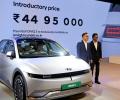
'The semiconductor supply is constantly improving, with visible green-shoots in the situation as compared to earlier part of last year'
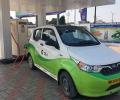
Signals received from the government in the past one year reflect a state of utter confusion, says Abhishek Tripathi.

The government has initiated a process to define standards and guidelines for electric charging stations.
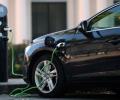
Government needs to promote electrification and charge points and make sure India has stable power supply.
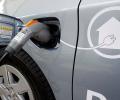
At a time when consumers increasingly embrace green mobility solutions, it is not electric cars but hybrids that are taking the lead, as automotive sales data indicate. Since January, 64,097 electric cars have been sold compared to 266,465 hybrids, according to data from the ministry of road transport and highways' Vahan dashboard. Hybrid car sales have surged from 4.42 per cent of the 4.1 million cars sold in calendar year 2022 to 7.2 per cent this year.

'Now that all the early adopters have the electric car, governments are backing down in some countries because they do not have the money to subsidise so much.'
At a time when consumers increasingly embrace green mobility solutions, it is not electric cars but hybrids that are taking the lead, as automotive sales data indicate. Since January, 64,097 electric cars have been sold compared to 266,465 hybrids, according to data from the Ministry of Road Transport and Highways' Vahan dashboard. Hybrid car sales have surged from 4.42 per cent of the 4.1 million cars sold in calendar year 2022 to 7.2 per cent this year.

Hopes to launch full-size SUV MG Gloster by Diwali 2020, and have four products in the market in one-and-a-half years of its operations in India.
Tata Motors plans to have 10 new battery electric vehicles (BEVs) in its domestic product portfolio by 2025 as it looks to drive its business model towards sustainable mobility going ahead, as per Tata Motors chairman N Chandrasekaran. In his message to the shareholders, he noted that the auto major aims to be amongst the world leaders in sustainable mobility solutions and as part of that it is also exploring tie-ups in cell and battery manufacturing to secure supplies for its portfolio of green vehicles. "In India, EV penetration in our portfolio has now doubled to 2 per cent this year and we expect penetration to increase exponentially in the coming years. "Tata Motors will lead this change in the Indian market. By 2025, Tata Motors will have 10 new BEV vehicles and as a Group, we will invest proactively to set up charging infrastructure across the country," Chandrasekaran informed shareholders in the company's Annual Report for 2020-21.

By 2025, Uber projects that 25,000-30,000 cars -- or 12 to 16 per cent of vehicle additions -- would be EVs, reports Surajeet Das Gupta.

Tata Motors, India's largest electric passenger vehicle manufacturer, has signed an agreement with ride-hailing company Uber to supply 25,000 electric vehicles (EVs), the company said. The agreement is the largest EV commitment between an automotive manufacturer and a ride-sharing platform in India. Under the agreement, Uber will deploy Tata Motors' XPRES-T EVs by partnering fleet operators in Delhi National Capital Region, Mumbai, Kolkata, Chennai, Hyderabad, Bengaluru, and Ahmedabad.

Bajaj Auto, the king of the market for CNG-powered passenger three-wheelers, now wants to replicate this dominance in two-wheelers. The difference is that while the former is zooming - registrations for CNG-powered passenger three-wheelers nearly doubled during January-December 2023 - the latter, meaning a market for CNG-powered two-wheelers, does not exist.

Speaking at the forum, Suzuki Motor Corporation (SMC) representative director and president Toshihiro Suzuki said, "Suzuki's future mission is to achieve carbon neutrality with small cars. "We will continue active investment in India to realise Self-reliant India (Atma-nirbhar Bharat)." Under the MoU, the company's wholly-owned arm Suzuki Motor Gujarat Pvt Ltd (SMG) will invest Rs 7,300 crore for the construction of a plant for BEV batteries at a land neighboring to SMG's existing plant by 2026.

'SUV is a very intensely fought category, unlike hatchbacks and cars.'

Recently, world headlines buzzed with Elon Musk's announcement that he was shelving his audacious bid for social media platform Twitter. Away from the media spotlight, questions are being asked about the maverick billionaire's plans in India, too. A few days ago, a Reuters report said Musk's flagship Tesla had put on hold its plan to launch electric cars in India.
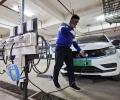
New Delhi's timing couldn't have been worse, both for India's fledgling electric vehicle (EV) sector and prospective electric bike buyers. It was hard to miss the perfect storm brewing for India's EV industry since early 2022. On one hand, you had several accidents involving battery fires that unnerved consumers; on the other, uncertainty had crept in over subsidies.
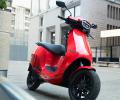
It takes a while to get used to the constant and instant supply of power that is the case with EVs, and handling the S1 Pro when it takes a corner or makes a turn can be tricky, says Pavan Lall.
Tata Passenger Electric Mobility (TPEM), a subsidiary of Tata Motors, on Friday announced that it has commenced production at its second factory in Sanand, Gujarat, which it had acquired from Ford India last year. This new facility will unlock an additional manufacturing capacity of 300,000 units per annum, which is scalable to 420,000 units. The new facility is spread over 460 acres and is adjacent to Tata Motors' existing passenger vehicle facility in Sanand.

The e-SURVIVOR symbolises Maruti Suzuki's commitment to help develop the entire life cycle of EVs in India

Having established its presence in the country, luxury carmaker Lexus is now looking to chart its next phase of growth in India as it looks to consolidate sales network and drive in new models, including fully electric cars in the country, according to a top company official. The company, which is the luxury car arm of Japanese auto major Toyota, initiated operations in India in 2017 and currently sells seven models in the country, including the locally-produced ES 300h sedan. Known for its self charging hybrid cars, the company is now gearing up to drive in battery electric vehicles, besides ramping up its existing product portfolio in the market.
 © 2026 Rediff.com - Investor Information - Advertise with us - Disclaimer - Privacy Policy - Sitemap - Feedback - About us - Terms of use - Grievances